Why Thailand Is So Popular With Tourists
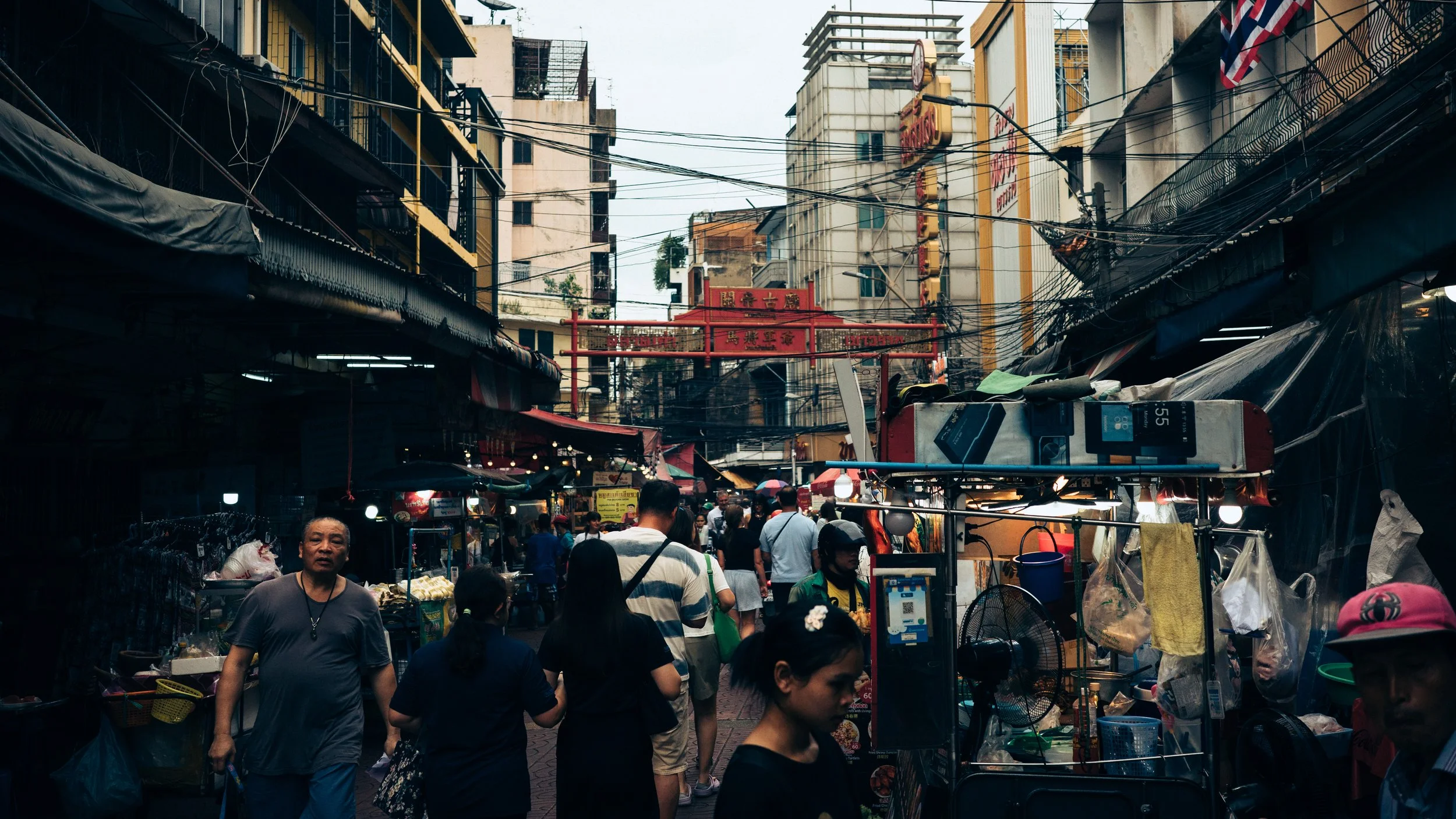
Photo by Edward A. Leon for Bangkok Unmapped
Thailand remains one of the most visited countries in the world. Bangkok regularly ranks among the top global destinations, while beaches, temples, and markets draw millions of visitors each year.
Yet for long-term visitors and residents, a quiet contradiction often emerges.
After years of returning, and especially after living here, many people begin to question the appeal. The famous attractions feel crowded, commercialised, and repetitive. The must-see list loses its impact.
So why does Thailand continue to dominate global tourism?
The answer has less to do with what Thailand shows and more to do with what it offers emotionally.
In this article
Why Thailand’s appeal is built on emotional contrast, not attractions
How price reshapes everyday experiences for visitors
Why hospitality feels cultural — until it doesn’t
Why Bangkok’s chaos energises tourists and exhausts residents
When attractions stop disappointing and start fading into irrelevance
Thailand Doesn’t Sell Attractions — It Sells Contrast
Tourists rarely travel to Thailand for a single landmark.
They come for the contrast:
Warm weather year-round
Lower daily costs
A relaxed pace of life
Fewer visible social and bureaucratic pressures
Compared to colder, more expensive, more regulated countries, Thailand feels lighter. Life appears simpler, even when it isn’t.
The temples, beaches, and night markets serve as visual anchors, but they are not the main product. The feeling of escape is.
Price Changes How Everything Is Experienced
Thailand’s tourism appeal is inseparable from affordability.
For short-term visitors:
Street food costs less than coffee back home
Massages feel indulgent but inexpensive
Hotels deliver comfort at prices that feel like value
This creates a distortion. Ordinary experiences feel exceptional because the cost-to-enjoyment ratio is unusually high.
Over time, for residents, this perception shifts. Daily expenses, rent, visas, healthcare, and time replace holiday pricing. The magic fades, not because Thailand changes, but because the visitor’s relationship to it does.
Hospitality Feels Like Culture
Thailand is widely perceived as friendly, polite, and welcoming. Service culture is strong, conflict is often avoided, and interactions feel smooth.
For tourists, this warmth feels cultural and personal. In reality, much of it is professional hospitality, efficient, practiced, and transactional.
That distinction rarely matters on a two-week trip. It becomes clearer over months and years.
Thailand doesn’t deceive visitors. It simply doesn’t reveal everything at once.
Bangkok’s Controlled Chaos Feels Alive
Bangkok operates in a space between structure and disorder.
Rules exist, but they’re flexible.
Systems work, but imperfectly.
The city is loud, busy, unpredictable, yet largely safe.
For visitors from tightly controlled environments, this feels energising. The city feels alive.
For residents, especially long-term ones, the same qualities can become tiring. What feels freeing at first can later feel inefficient or draining.
Both experiences are valid.
Travel Toolkit
Bangkok works because of systems — transport, timing, payments, connectivity.
When you understand how those systems fit together, the city becomes easier to move through.
The Bangkok Unmapped Travel Toolkit outlines the practical tools we actually use to navigate daily life here.
→ View the Bangkok Travel Toolkit
Tourism Marketing Hasn’t Caught Up With Reality
Thailand continues to be marketed using familiar language:
Exotic
Spiritual
Affordable paradise
“Land of Smiles”
This narrative has changed very little over decades.
As a result, visitors arrive with a pre-built fantasy. Thailand delivers just enough of it, particularly on short stays, to meet expectations. Temples feel mystical, markets feel authentic, beaches feel untouched.
Stay longer and the repetition becomes visible. Crowds, commercialisation, and over-tourism flatten experiences that once felt special.
Most tourists leave before that stage.
Overrated Attractions Aren’t a Flaw — They’re a Feature
Many of Thailand’s most famous attractions are not world-class in isolation. They are often crowded, heavily monetised, and visually similar to one another.
But they don’t need to be exceptional.
They only need to be:
Easy to access
Affordable
Distinct from home
Photogenic enough to justify the journey
For first-time visitors, that is enough. For long-term residents and seasoned travellers, the spectacle quickly loses relevance.
Eventually, You Stop Being the Audience
Thailand’s tourism model works best for:
First-time visitors
Short stays
Emotional escape
High contrast, low commitment travel
Once Thailand becomes daily life rather than a temporary break, the country reveals itself more fully complex, imperfect, efficient in some ways, frustrating in others.
At that point, tourist attractions don’t disappoint.
They simply stop mattering.
Final Words
Thailand’s popularity isn’t built on world-class attractions. It’s built on contrast.
For first-time visitors, Bangkok feels warmer, cheaper, looser, and more alive than home. That contrast does the heavy lifting. Temples, markets, and viewpoints become visual proof points, not the reason people come, but enough to justify the feeling they’re chasing.
Live here long enough and that contrast fades. The attractions don’t decline; they simply stop performing. What once felt extraordinary becomes familiar, repetitive, and occasionally overwhelming.
That doesn’t make Thailand overrated.
It means Thailand was never designed to be consumed slowly.
Bangkok works best as a short escape, a reset, a pause from structure and pressure. When it becomes daily life, the fantasy gives way to something more honest, a city that is functional, flawed, vibrant, and real.
Reaching that point isn’t disillusionment.
It’s perspective.